Updated October 20, 2025. Yesterday, I finished reading American Anthrax by Jeanne Guilleman where I am referenced as “an author writing a book on hazing.”
I am noting one mistakes she made on page 227: Jeanne Guilleman describes a hazing activist (not by her actual name) as “a woman whose daughter died in a hazing incident.” Guilleman should have written “whose son died in a hazing incident.” In my opinion, despite the small errors, I found this an important and readable crime investigation of the life and actions of FBI suspect Bruce Ivins. Guilleman might have improved her book had she interviewed the hazing activist (as did author David Willman).
Guilleman does present an in-depth investigation of the suspect’s obsession with Kappa Kappa Gamma fraternity, a women’s sorority, that was very well researched. I’d recommend this book and the one by David Willman below to all lovers of crime fiction.
PHOTOS: Link to the copy of Bruce Ivins letter to a hazing activist.
Commentary by Hank Nuwer
A new book by David Willman called “The Mirage Man: Bruce Ivins, the Anthrax Attacks, and America’s Rush to War” (Bantam, $27) is one of those books people tend to talk about around the water cooler. Five people, including postal workers, died from the effects of deadly powdery anthrax sent by mail, and at least 17 persons were infected. Tom Brokaw was the most high-profile journalist sent a tainted letter.
Author David Willman did not contact me for the book, but he did contact and visit a hazing activist that anthrax researcher Bruce Ivins had written at least five times.
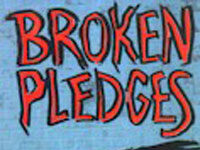
An FBI researcher/investigator some years ago talked to me about an excerpt from a letter to the editor in Virginia that I quoted in my book “Broken Pledges.”
A Frederick (VA) newspaper letter purportedly written by Kappa Kappa Gamma alumnus Nancy Haigwood in defense of hazing was written actually under Haigwood’s name by Ivins. That was a forgery and an ethical breach by Ivins if he signed her name to the letter, and it now appears to be so, according to Willman and others.
Willman’s book cites sources who concluded that Bruce Ivins had sent the anthrax-powdered letters to multiple victims. The Ivins connection was first announced by the FBI in 2008. Perhaps because the FBI investigation was widely criticized (but not by me), the FBI took down hundreds of documents it had placed on the Internet for the public to read.
I once tried to find Ms. Haigwood for an interview for her pro-hazing views (rather what Ivins falsely portrayed as her pro-hazing views) but failed. Other hazing scholars have quoted from the same letter to the editor written in Haigwood’s name by Ivins.
In the late 1980s, Kappa Kappa Gamma spokespersons I contacted said they could not for privacy reasons give me Haigwood’s last-known address from their national sorority alumnae membership roster so I could question her, but they stressed the organization’s antihazing stance and that Haigwood did not speak for the organization.
Ivins also wrote the Jimmy Flathead materal on KKG for Wikipedia, according to the FBI.
My first and only interview with the FBI (set up by my now-deceased attorney friend Ben Pesta) made it clear to me as a writer that Ivins was not my source in any way, and I had no obligation to withhold any correspondence from him to a hazing activist provided to me by that hazing activist for my 1990 book “Broken Pledges” (Longstreet Press).
I now omit the name of the activist here because she retired from public life long ago and wants no media intrusion, and her name isn’t so important here.
If he had been a source I would have contacted the Poynter Institute ethics gurus for advice on that sticky issue about providing material from a source to the FBI.
The single photocopied letter to the activist dated 5/29/83 I did find in a file cabinet of mine was printed in Ivins’s odd printed script and contained the letter to the editor he had forged as an attachment.
Yes, as you can read yourself in my photo of the letter, he did write there that he was working at Fort Detrick on an anthrax project.
The FBI interviewer showed me email addresses that she said Ivins might have used to contact me in the 1990s, but none rang a bell. Was he one of a small group of email writers sending baiting, encouraging or snide letters in the 90s after “Broken Pledges” hit print? If he ever did write it was inconsequential. B ut after reading the FBI report tonight I wonder if Ivins joined a hazing listserv fom Indiana University run by my IUPUI department chair and I, although I was the prime mover here. If Ivins did join, and there may be records somewhere to corroborate, he was never a prime topic responder.
I provided the FBI via mail my thin file of Ivins’ material he had written to the hazing activist. To me it was interesting how an FBI researcher is so much like a news reporter. She was prepared, professional, thorough and wasted no extra time in my office. Subsequently, the FBI was given all the activist’s files and turned up five letters from Ivins, including a thank you for sending him information on sorority hazing.
Some 21 years after publication, my apologies go to Ms. Haigwood for the “Broken Pledges” reprinting of the editor to the letter that Ivins wrote. Clearly, she wasn’t an advocate of hazing. And wasn’t that nice of Ivins to forward his forged letter to a mother who had lost her son to hazing? He knew it would probably draw a response, and it did–the activist gave it to me. The activist said she had forgotten all about the Frederick letter, but I recalled it because of the interviews with KKG as I went on a failed search trying to find Haigwood to obtain original commentary for “Broken Pledges.”
I do not presume to know if Mr. Ivins was the feared anthrax mail sender or acted alone. Like many others, I wish I knew for sure. Would I love to have been the journalist who solved the anthrax crime? Yes, Tom Brokaw and me both.
I voluntarily signed a non-disclosure letter, but the FBI agent asked if I would let the activist know an investigation was in the works. I kept that promise to not disclose anything until the files were unsealed, although really I knew so little it hardly mattered.
I wondered once if Ivins knew the FBI had talked to the activist and me, but since she and I were hardly consequential with the heat on him, I gave the matter no other thought except whenever the activist called me the few times Willman phoned or visited her for interviews.
The fixation of Ivins on Kappa Kappa Gamma sorority because of some supposed slight when he was young was strange behavior for a grown man. His hazing support was a cover for his attack on Ms. Haigwood, of course. In fact, look up hazing in the FBI report, and Ivins was all for blindfolds and limited hazing. But if the correspondence connected to hazing led the FBI to a killer I am pleased, but I’m sure the hazing connection was a mere footnote in the greater investigation, and in no way a crime solver. His support of the antihazing movement in my opinion was used for his self-serving own purposes–just as was his donation to a KKG foundation.
I can see why the results of the FBI investigation have doubters on the Internet questioning if it is indisputable that Ivins was the anthrax killer or acted alone. The FBI investigation certainly seems to have spurred the suicide of Mr. Ivins by ingestion of OTC medication, according to the new book.
I am glad the saved correspondence from Ivins helped the FBI at all–though I think the activist and I were mere footnotes in the massive biochemical attack investigation that threw the nation into a tizzy so soon after 9/11. But I think the national debate on whether he was guilty or innocent in the anthrax attacks will continue for years. This case was concluded officially and the files unsealed when Ivins killed himself. Unofficially, it will be debated by many people, especially now that Willman’s book is out.
There is a personal sad note about the anthrax story.
One of the hardest-working, nicest students I ever taught at Ball State University (1985-1989) was a national spokeswoman for the U.S. Postal Service during the anthrax mail scare aftermath in 2001.
When I guest-taught a class for her at Martin University in Indianapolis where she was an adjunct journalism instructor, she talked about how stressful it was conducting her PR. duties during the anthrax media blitz. My mentee Darlene Stafford (former resident of Dunkirk, Indiana) later died from heart failure in or near Dallas, Texas, where she had moved to join her new husband. Her mother used to attend class with Darla, and her mother’s phone call to me in 2006 with the bad news was so sad to experience.
I cannot blame Ivins directly for Ms. Stafford’s death, of course, since it occurred five years after the anthrax scare. If he was the anthrax sender, he only can be faulted for causing her job stress at that time.
But given what he did to Ms. Haigwood, I can say with certainty this Dr. Ivins was one troubled, unfortunate individual–one troubled, unfortunate individual with a questionable security clearance at Fort Detrick and access to deadly anthrax.
Hank Nuwer, Moderator