CNN reports that a bullied boy in England would love positive greetings on his birthday. His name is Ollie. I sent mine–Moderator HN. To Ollie at @Hopenlesmyth
Author: Hank Nuwer
Journalist Hank Nuwer tracks hazing deaths in fraternities and schools. Nuwer is the Alaska author of Hazing: Destroying Young Lives; Broken Pledges: The Deadly Rite of Hazing, High School Hazing, Wrongs of Passage and The Hazing Reader. In April of 2024 and April 2025 , the Alaska Press Club awarded him first place in the Best Columnist division.
He has written articles or columns on hazing for the Sunday Times of India, Toronto Globe & Mail, Harper's Magazine, Orlando Sentinel, The Chronicle of Higher Education and the New York Times Sunday Magazine. His current book is Hazing: Destroying Young Lives from Indiana University Press. He is married to Malgorzata Wroblewska Nuwer of Fairbanks, Alaska. Nuwer is a former columnist for the Greenville (Ohio)Early Bird and former managing editor of the Fairbanks Daily News-Miner in Alaska.
Nuwer was named the Ohio Society of Professional Journalists columnist of the year in 2021 for his “After Darke” column in the Early Bird. He also won third place for the column in 2022 from the Indiana chapter of the Society of Professional Journalists. He and his wife Gosia, recently of Union City, Ind., have owned 20 acres in Alaska for many years. “The move is a sort-of coming home for us,” said Nuwer. As a journalist, he’s written about the Alaskan Iditarod sled-dog race and other Alaska topics. Read his musings in his blog at Real Alaska Daily--http://realalaskadaily.com
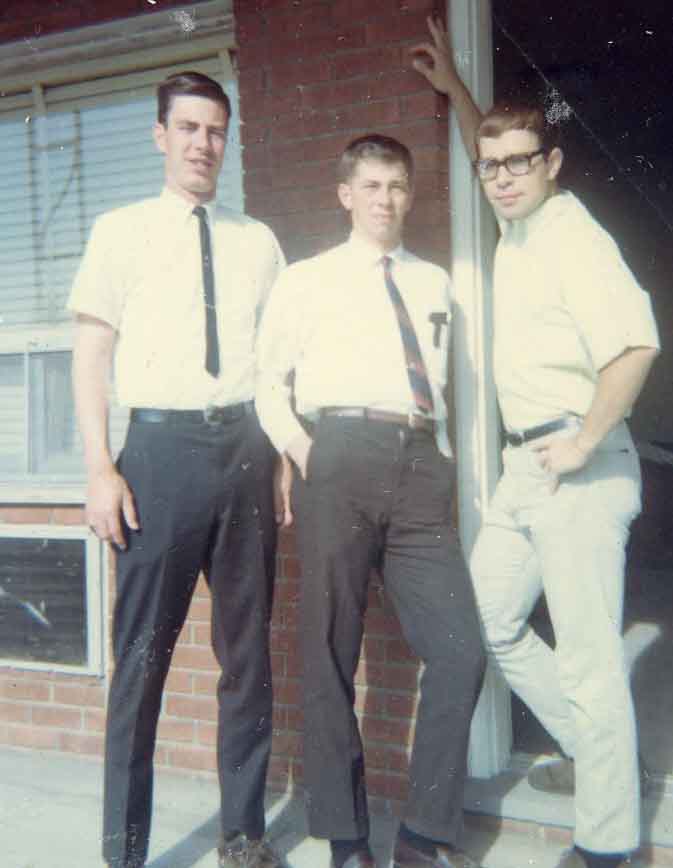

Under the Influence: My Mentor, Professor Fraser Drew.
by Hank Nuwer.
I Before Buffalo State English Education Professor Robert Mehl would let me student teach to graduate, I had to purge from my speech ungrammatical constructions and Polish inflections thick as my grandmother’s duck’s blood soup. I bought a grammar book and a tape recorder with two reels the size of 45 RPM records. All the summer of ’67 I spun those reels in my room. Instead of sophisticated, I sounded breathless – and still do. But the supervisor of student teaching was satisfied and let me student teach – a requirement for graduation.

I hold no resentment against Buffalo State. As if atoning for the obliteration of my speaking voice, it introduced me to the teacher who helped me find my voice on paper.
II
During the 1964-1965 school year, while I played right field sparingly on State’s freshman baseball team, Professor Fraser Bragg Drew went to Ireland and hopped a steamer from Galway to the Aran Islands, his face blistering from wind and salt. Trim, lithe and commanding in a classroom, although paralyzed when speaking elsewhere, Drew had a crewcut that he mowed often. He was half Irish, the English and Scots in him splitting the difference. In 1966 1 signed up for his introductory literature course. He was an honorary brother in my fraternity, and I thought he might be a pushover, an impression I’d formed when he signed my pledge plaque. On my first day, I flirted with an oblivious female classmate. Drew stopped lecturing and pointed to a seat in front of him. I collected my books, cheeks glowing like oven burners. Some pushover.
III
Drew had been reared in Vermont, a country boy much like Robert Frost’s swinger of birches. He was mad about horses, accompanying an aunt and uncle to the track to watch their trotter compete. Later his love shifted to wolves, foxes, jays, and hawks. He came to admire the writings of John Masefield and Robinson Jeffers who used animals as metaphors in their poetry. His early learning came from books, and he prayed that he pronounced words properly the first time he said them
As an adult he combined scholarship with his love for adventure. In 1955 Drew had an audience with Ernest Hemingway, the novelist whose books moved him the most. Hemingway seemed shy until the visitor pleased him by recognizing Joan Miro’s painting, The Farm, across a dining table. The writer took Drew to his office and pointed out his typewriter atop a bookshelf where he typed while standing. Hemingway gave Drew a sackful of signed books for himself, his father,and three students. Drew had come up with the idea of starting an annual contemporary literature award, giving his best students copies of signed volumes by writers and Hemingway applauded such generosity.

The writer talked about his convalescence from a plane crash and wished that he could have taken Drew on a fishing cruise. “Writers are always a disappointment when you meet them,” Hemingway said. “All the good in them goes into their books, and they are dull themselves.”

IV
It was fashionable then to separate the work from the artist. Some colleagues dismissed him for emphasizing the biographies of authors when he taught. He fought back, telling them that such teaching would be soulless and sterile.
In 1953 he maneuvered to spend an afternoon in RobertFrost’s Vermont cabin. Frost was prideful enough to inquire how hispoems were being taught. He sent the teacher away with an admonition:”Don’t teach them a lesson,show them a lesson.”
I never missed class, because I never knew what treasureDrew might bring in next: a signed letter sent to him by Masefield or Jeffers, the rare books and magazines he collected, and personal photographs taken of authors that they themselves had given him. He was so enthusiastic that his voice skipped octaves when he lectured – except when he recitedpoetry and ancient ballads with the skill of an orator.
V
My attention shifted from the joys of hitting a fastballto literature. I changed my major from history to English, checkedoutbooks by the sackful from the library, and put the same manic energyintostudy that had goneinto batting practice and mischief.
In 1967, John Maseficld passed away, and I took Drew’sclass in contemporary literature. I began writing to authors, telling them how their work moved me. Replies came from novelist ThorntonWilder, poet Archibald MacLeish, and humorist Ogden Nash. I would show these to Drew as they arrived. He seemed excited by my excitement,never letting on that he had cultivated similar enthusiasms in hundreds of students.
One day I bushwhacked him in a grassy quad after class and asked him if he would read some poems I had written. He returned them with a few encouraging remarks. His guarded approval made the arranging and rearranging of words a satisfaction, something constant in my life that I’ve kept to this day

VI
I began sending poems to magazines. A few were published, but in time all I could see in them were defects. I destroyed them as I closed in tight on my 30th birthday. Perhaps I recalledDrew’s praise of Housman’s flawless use of language and his “happy faculty of selecting the exact, the inevitable word and phrase.” The author of A Shropshire Lad (which Drew bought in a first edition for 510 pounds sterling) concealed the labor in his work, never showing chisel- marks in stone. My poems had been sculpted with a heavy hand, dulling the chisel and fragmenting the stone.
VII
Right before graduation my father called me into theliving room and said that my name was in the Buffalo Evening News. I froze, because it had just been in there for speeding down Main Street,a fact that I’d kept from him until the paper printed my conviction. He showed me a notice that said Buffalo State had named the winners ofDrew’s 1968 contemporary literature award. I’d been awarded a firstedition signed by Drew and poet Louise Townsend Nicholl. She wrotehim 1,056 letters in her lifetime.
Rarely have I seen Drew since. Twice he met withmywife and me tohold his namesake, Adam Robert Drew Nuwer. He warnedmywife that oneof his three small dogs liked to burrow in the sweatersof ladies, but mischievously left her to figure out which one did. He came to my father’s wake with his housemate; they whispered quiet wordsto comfort my mother.
We keep in touch with letters. The handwritingis shaky, but the ideas, the wit, and the insights remain bold and challenging. He uses postage stamps honoring writers: Jeffers, Frost, Hemingway – andI thrill to know a man who has corresponded with these geniuses. I once sent him a packet of pictures of my son. On the envelope Ihad put an admonition not to bend or fold. This brought back a note. He had once sent that message to a woman who gave him a gentle reproach:”Mrs. F. D. Carpenter admits that on occasion she might bend but will never fold.”
When I applied for a teaching position at Ball State in 1985, he wrote a letter of reference, stating that I had been in the topone percent of allhis students in scholarship and the best writer. He must have possessedsufficient ego to have wanted to produce a literarygenius,but he neverinflicted pressure on me to achieve, understandingthe insecurities of writers. When my book containing interviews with contemporaryauthors was publishedwith printer-caused typographical errors, he calmedmy rage. Housmanhated typos, he said. There was one on theform distributed at the poet’s funeral.
VIII

In 1973 the chancellor of the State University of NewYork named Drew a Distinguished Teaching Professor. In 1982 then-mandatory retirement at 70 forced him to leave Buffalo State after 38 years. He did not go gently into retirement, taking trips to Ireland and paddling a red canoe in Lake Erie. In 1999 he permitted me to start an award at Buffalo State in his name (and that of a deceased friend, Joe N–). Every year I send signed books from contemporary writers to the library.
IX
For many years he has slipped nitroglycerin under his tongue to combat angina pectoris. A couple years ago he wrote to say that getting letters from friends had become preferable to face-to-face meetings. He admitted that an elderly friend had once hurt him with a similar rebuff years earlier and begged me to understand. “We wither into the truth,” he wrote, quoting something that William Butler Yeats had said in a different context.
Early in 1993 I lectured at the University of Vermont. I visited Bailey/Howe Library and was astonished to see plaque after plaque commemorating donations that Drew had made in the name of his deceased kin and his mentor, Lester Marsh Prindle, a Harvard-educated professor at Vermont who introduced Drew to Housman’s poetry. A special collections employee told me that Drew has been the department’s single most generous benefactor.
Photos come from him every two or three years. The distinguished look is still there, but the fragility – where did it come from? I phoned his house mate, who is in his 60s and vigorous, to getDrew’s copies of published notes from his visit to Hemingway, but didn’t want to tip Drew off that this piece was in the works.
“Is that for me?” I heard in the background. Hearing Drew’s changed voice was like recognizing a long-lost silver fork in spite of its tarnish. His father lived into his 90s, I reassured myself.

X
During the 80s and 90s his letters contained references to friends, colleagues and students who had died. “It is unnatural to survive one’s children or students,” he wrote. He began to regularly ask about my wife’s health and mine, as she and I did about his. On June 23, 2013, he turns 100. 1 cannot know what living a full century is like for him. What I do know is that he reads his beloved Housman to get him through times of strife and sorrow. He is like the survivor of a bad accident, warm in an idling patrol car, but aware of wreckage nearby. I hope that his splendid Irish literature collection sends him back to days when he was invincible. In my mind’s eye, I see him navigating the rough waters off the Irish Blasker Islands in a fragile currach, taking notes to show his students a lesson.
PS: I am attaching an article about Fraser Bragg Drew from the Buffalo State alumni magazine
Full Circle by Mary Durlak

Every professor who is a teacher as well as a scholar hopes to make a difference in the lives of his or her students—and many do. However, all too few know how influential they have been. Among that fortunate few is Fraser B. Drew, SUNY Distinguished Teaching Professor emeritus of English.
Drew, who served Buffalo State from 1945 to 1983, was on campus in May to sign copies of a book he edited with Hank Nuwer, ’68. The book, One Long, Wild Conversation: Selected Letters Between a Buffalo State Professor and His Student, a Writer, is a collection of letters the two have written to each other since 1970.
Nuwer has achieved international renown for his expertise on, and uncompromising opposition to, hazing. But it was Drew’s former students who packed the room where the book-signing took place.
Sonia Young, ’54, ’66, one of the many alumni in attendance, recalled, “Professor Drew made students love literature.”
Although Nuwer was already a passionate reader and lover of words—“my mother pulled me to the library in a little red wagon three times a week,” he said—he learned much from Drew. “He gave me a framework to understand literature,” he said, “and the ability to focus.”
However, Drew’s real gift to Nuwer was his willingness to mentor the young student. Mentorship is a labor of love because it requires making the time and effort to provide support, encouragement, and advice. When Drew indicated approval of Nuwer’s college poetry, it gave Nuwer the confidence he needed to begin to emerge as a writer. Over the years, the mentoring relationship became a friendship as well.
The two have shared many interests, including dogs, travel, and authors. Drew established correspondence with notable writers—Ernest Hemingway and Robert Frost are perhaps the best known—as a way to answer questions raised by his students in class. He found Hemingway especially accessible. “Writers want to know that their work is being taught and passed on,” said Drew. Drew’s custom was to obtain authors’ autographs on their books and award the signed books to selected students, a practice Nuwer has followed.
However, what binds them more than common interests is a shared attitude of interest, a curiosity about what wags the world. For example, as research for an article about rodeos, Nuwer rode a bull—at age 58. (His broken ribs have healed.) Drew’s second home for 15 years was Ireland, which he never tired of exploring. They are enthusiastic about whatever engages them, and they both extend palpable warmth to strangers.
“Curiosity and enthusiasm are integral to teaching and writing,” Nuwer said.
However, it wasn’t curiosity that led Nuwer to become a leading expert on hazing. “Hazing found me,” he said.
While he was a recent past president of a graduate student association at a university in Nevada in 1975, a fellow student died in a hazing incident. When he tried to learn more about the practice of hazing, he found that little information existed. So Nuwer applied for and received a grant from the Gannett Foundation to research and write Broken Pledges: The Deadly Rite of Hazing, which he has followed with three more books about hazing, in addition to his other writings.
Buffalo State recognized his achievements with the Distinguished Alumnus Award in 1999. He has established the Hank Nuwer Hazing Collection at the E. H. Butler Library at Buffalo State, and he expects it to become the premier resource in the country for research into the topic.
Drew is among the people to whom Nuwer dedicated Broken Pledges. Upon seeing the dedication, Drew wrote to Nuwer, saying, “Any ‘debt’ you feel to the long-ago teacher has been lovingly paid, and more than adequately.”
Nuwer, for his part, suggested the title for their book in the last letter in the collection, adding, “As with all things between us, I hope you approve.”
Update: The Death of Fraser Drew
A Search for the Elusive Goblin Fish.
A Memory of William (Tiny) Boyles and Jimmy Dale Noble.
by Hank Nuwer.
In 1978, a book publisher wanted the services of a writer without good sense to trail William (Tiny) Boyles, a 389-pounder who made his living as a skip tracer. Hired by bondsmen to bring back bail jumpers, Tiny had muscles, but he wasn’t talented in the hundred-yard dash. So he hired people with foot-racing skills like high school dropout Jimmy Dale Noble, a sometimes logger, deputy sheriff, guitar picker and songwriter in low-rent bands.
I, a self-taught writer, went with Tiny on his rounds to get a feel for his job and co-wrote four adventure novels with him. Eventually I figured out that some of the bad guys he claimed to have brought to justice were in fact creations and not real people.
“The Bounty Hunter” series was about four friends who brought villains back to a bondsman for a percentage of the bond. The characters were larger-than-life Tiny Ryder; Hammer, a block of granite who uttered only one sentence in every book as a character device; Jerry Jeffers, a rowdy backup singer, and Foster Foster, a bumbling journalist along to get freelance stories, who led the other three into life-threatening situations.
The ride lasted two years. Our last publisher, Berkley/Jove, decided the series lacked mass-market clout, ending it after the publication of Blood Mountain in 1981. I was relieved, because Tiny and I were never going to win a Pulitzer for our fiction. I hoped to pursue projects with substance. The books were more like stenography than novels of my own making. They were part reality but mostly fantasy and fiction straight out of Tiny’s biker culture.
Tiny died suddenly in 1984. At the end he was telling his stories to another potboiler novelist, but this time he wasn’t getting fifty percent of a byline and royalties. A Reno newspaper editor told me he had walked into her office with his scrapbook, hoping to find one more writer willing to chronicle his tales tall and true. He found it hard to go on boring stakeouts to pick up punks, having enjoyed the attention when Linda Ronstadt and the Skipper from Gilligan’s Island attended a lavish book party the publisher had thrown for him. No longer did Larry King, Tom Snyder and PM Magazine ask him to tell nation-wide audiences about his exploits.
I never saw Tiny again after an autograph session in California late in 1981. He was the king of hyperbole and a ring-tailed roarer, and a throwback to the days of the legendary bellowing boaster Mike Fink. Although we had our serious arguments, I respected his incredible storytelling skills. (I do keep in touch with Tiny’s children, although it has been 36 years since I babysat them). Every now and then I think about 100 percent rewriting those Bounty Hunter books, and putting those chauvinistic, foul-mouth characters into a work of literary detective fiction. That will never happen, of course. Tiny died of a heart attack in July of 1984. It was the worst year of my life, losing this co-author, my father, and a baby to miscarriage all in a couple months’ time.
But Jimmy Dale Noble stayed in touch with me by mail and phone even after I’d taken a job teaching journalism at Ball State University and wrote serious works about hazing, the environment, and author profiles. In the late eighties Jimmy Dale and I reunited twice briefly when I came to Missouri to write profiles on third baseman George Brett and rodeo clown Leon Coffee. Tiny had cast a wide, though not long, shadow over Jimmy, and now I saw him as his own person–not a mere model for a stock character. He told me stories about his days as a high rigger, a dangerous job requiring agility and guts. To keep their nerve, most tree toppers chew tobacco, he said. He didn’t like the sour taste and puffed cigarettes.
“We’d start at the very bottom and take limbs off as we went up,” Jimmy Dale once wrote me in a letter. “We’d keep going up while whacking off limbs until the remaining top was only 16 inches in diameter. The undercut was made as far as possible without getting the saw stuck, and a small, narrow notch was supposed to fall. Then, when everything was still, the final cut was made, and the top went into space. The jar from the top breaking free usually caused the giant post to sway 15 to 30 feet like an oversized whip. I’ve been damn near shaken from my perch more than once. The only time I’ve felt so free was while skydiving.”
During those visits we began talking about fiction and how loggers have been excluded from the serious novelistic treatment given to cowboys and whalers. We devised an outline for a novel about a logger that had elements in it of myth and suspense, with a comic tone throughout.
We collaborated in person, by phone, and by mail. I told Jimmy I was through writing potboilers, and he said he’d like nothing better than to write fiction in the vein of his Missouri hero Mark Twain. Neither of us expected to make more than $2,500 apiece for a literary novel, and so we had to write in the little time our paying day jobs left us. We set the novel in St. Joe, Missouri, Jimmy Dale’s birthplace and home of the Pony Express. He took me to rugged brush-and-timber country to set scenes. He knew trees by their bark and leaves. In a sawmill, when workers cut rough timber into boards, he identified species by their sawdust scent.
In time, the experiences from his life became the experiences of the protagonist in our thickening manuscript. I knew more about his life than I did my own. I lived too much in my mind, and I envied the self-assured way he accepted life’s dangerous realities.
Jimmy Dale referred to himself as a river rat; he was reared on a farm along the Missouri River near the stockyards of St. Joe. He and other country kids entered the pens of diseased cattle at night to have rodeo competitions. His life was shaped by the Mighty Mo and, like him, the river could be calm or wild. Near the farm was a long bridge that led to Kansas. As a young man he took a dare in early winter, “when it was colder than a well digger’s butt in a drainpipe,” and jumped, regretting the decision before his feet split the current.
He used to tell me that there were times when the river was so peaceful (“peacable” was his word) that he preferred a seat on the bank to one in heaven. All a river rat knew about a perfect world was a day on a sandbar with temperatures in the sixties, putting a worm with a great personality on a hook. We would steal breaks from writing to fish–taking legal pads with us to discuss structure, characters, plotting–and that’s how I remember him in my mind’s eye. The breeze is ruffling his greying hair, and his line is shaking. I see him tense for a second, hoping the cause is a fat catfish and not the wind from the east.
Jimmy Dale said his favorite fish was the Missouri goblin fish, named that because you only could catch one at the stroke of midnight on Halloween. The goblin fish–so big that two barges and a tugboat were required to get one to shore–was a picky eater. The only bait it would take a June bug weighing 63 pounds. “And everyone knows June bugs are scarce in October,” Jimmy Dale would deadpan.
The joy I found in collaborating on our novel equals the rush of creativity I experience while writing creative nonfiction under the guidance of a capable editor. I have a hint of what it is like for performing arts professionals to collaborate on a beautiful work, or a symphony to put on a world premiere. When human beings collaborate on a work of art, there is a meeting of sensibilities and souls that nothing, save the birth of a child, can match for euphoria and dread and hope.
The novel won’t be finished. Last October, right before goblin-fish season, Jimmy Dale died of a coronary. Brain-dead, he lingered for hours. His heart didn’t want to quit.
Farewell, partner. I’ll miss your friendship, your stories, our collaboration. You and I didn’t fail at writing that novel. We ran out of money and time.
Oh hell, you’d say to that, for you regarded sentimentality as unmanly. We failed awright—so sue us. Grab your fishin’ pole.
The journalist in me searches for fact. We failed, we failed. But we tried harder than many who rule.
I celebrate the lives of Tiny and Jimmy, especially as I get closer to the end of my own life. “What’s life been like in heaven?” I will want to know.
They’ll probably answer at once. “Who told you that you died and came to heaven?”
That was Tiny and Jimmy for you.
Here is a copy of the new federal hazing proposal. Comments yay or nay to hnuwer@hanknuwer.com
There is some
…………………………………………………………… (Original Signature of Member) 115TH CONGRESS 1ST SESSION H. R. ll To amend the Higher Education Act of 1965 to require institutions of higher education to disclose hazing incidents, and for other purposes. IN THE HOUSE OF REPRESENTATIVES Mr. MEEHAN introduced the following bill; which was referred to the Committee on ___ A BILL To amend the Higher Education Act of 1965 to require institutions of higher education to disclose hazing incidents, and for other purposes. 1 Be it enacted by the Senate and House of Representatives of the United States of America in Congress assembled, 3 SECTION 1. SHORT TITLE. 4 This Act may be cited as the ‘‘Report and Educate 5 About Campus Hazing Act’’ or the ‘‘REACH Act’’.
2. INCLUSION OF HAZING INCIDENTS IN ANNUAL SECURITY REPORTS. 3 Section 485(f)(1)(F) of the Higher Education Act of 4 1965 (20 U.S.C. 1092(f)(1)) is amended— 5 (1) in clause (i), by striking ‘‘and’’ at the end; 6 (2) in clause (ii), by striking ‘‘and’’ at the end; 7 (3) in clause (iii), by striking the period at the 8 end and inserting ‘‘; and’’; and 9 (4) by adding at the end the following: 10 ‘‘(iv) of hazing incidents that were re- 11 ported to campus security authorities or local 12 police agencies.’’. 13 SEC. 3. DEFINITION OF HAZING. 14 Section 485(f)(6)(A) of the Higher Education Act of 15 1965 (20 U.S.C. 1092(f)(6)(A)) is amended by adding at 16 the end the following: 17 ‘‘(vi) The term ‘hazing’ means any intentional, knowing, or reckless act committed by a student, or a former student, of an institution 20 of higher education, whether individually or in 21 concert with other persons, against another student, that— ‘‘(I) was committed in connection with 24 an initiation into, an affiliation with, or the maintenance of membership in, any organization that is affiliated with such institution of higher education; and 3 ‘‘(II) contributes to a substantial risk 4 of physical injury, mental harm, or degradation or causes physical injury, mental 6 harm or personal degradation.’’. 7 SEC. 4. RECORDING OF HAZING INCIDENTS. 8 Section 485(f)(7) of the Higher Education Act of 9 1965 (20 U.S.C. 1092(f)(7)) is amended by inserting after 10 the second sentence the following: ‘‘For hazing incidents, 11 such statistics shall be compiled in accordance with the 12 definition of that term in paragraph (6)(A)(vi).’’ 13 SEC. 5. EDUCATIONAL PROGRAM ON HAZING. 14 Section 487(a) of the Higher Education Act of 1965 15 (20 U.S.C. 1094(a)) is amended by adding at the end the 16 following: 17 ‘‘(30) The institution will provide students with 18 an educational program on hazing (as that term is defined in section 485(f)(6)(A)(vi)), which shall include information on hazing awareness, hazing prevention, and institution’s policies on hazing.’’
Categories
Hazing Scholarship
Review
Violence in youth sports: hazing, brawling and foul play
Authors Below
The Ohio State University, College of Education, School of Physical Activity and Educational Services, Columbus, Ohio, USA
- Correspondence toDr R D Comstock, Center for Injury Research and Policy, The Research Institute at Nationwide Children’s Hospital, College of Medicine, Department of Pediatrics, The Ohio State University, 700 Children’s Drive, Columbus, OH 43205, USA; dawn.comstock@nationwidechildrens.org
Abstract
By separating hazing, brawling, and foul play and failing to recognise that their connection to sport binds them together into a cohesive subset of sport injury and youth violence, past research has failed to show how sports-related violence is a broad example of interpersonal violence. The acceptance of violence within the sporting culture may, in part, explain why sports-related violence has not yet been widely recognised as a public health concern. This review shows that sports-related violence, including hazing, brawling and foul play, occurs among youth athletes of all ages and in a variety of different sports. The few studies to address this issue have all acknowledged the dangers of sports-related violence; however, no incident tracking method has been developed. Future research must provide accurate national estimates of the incidence of sports-related violence among youth, identify associated risk factors, evaluate preventive interventions and identify effective methods of distributing and implementing evidence-based interventions. Monitoring the magnitude and distribution of the burden of sports-related violence and building the scientific infrastructure necessary to support the development and widespread application of effective sports-related prevention interventions are essential first steps toward a reduction in the incidence of sports-related violence.